Other pictures
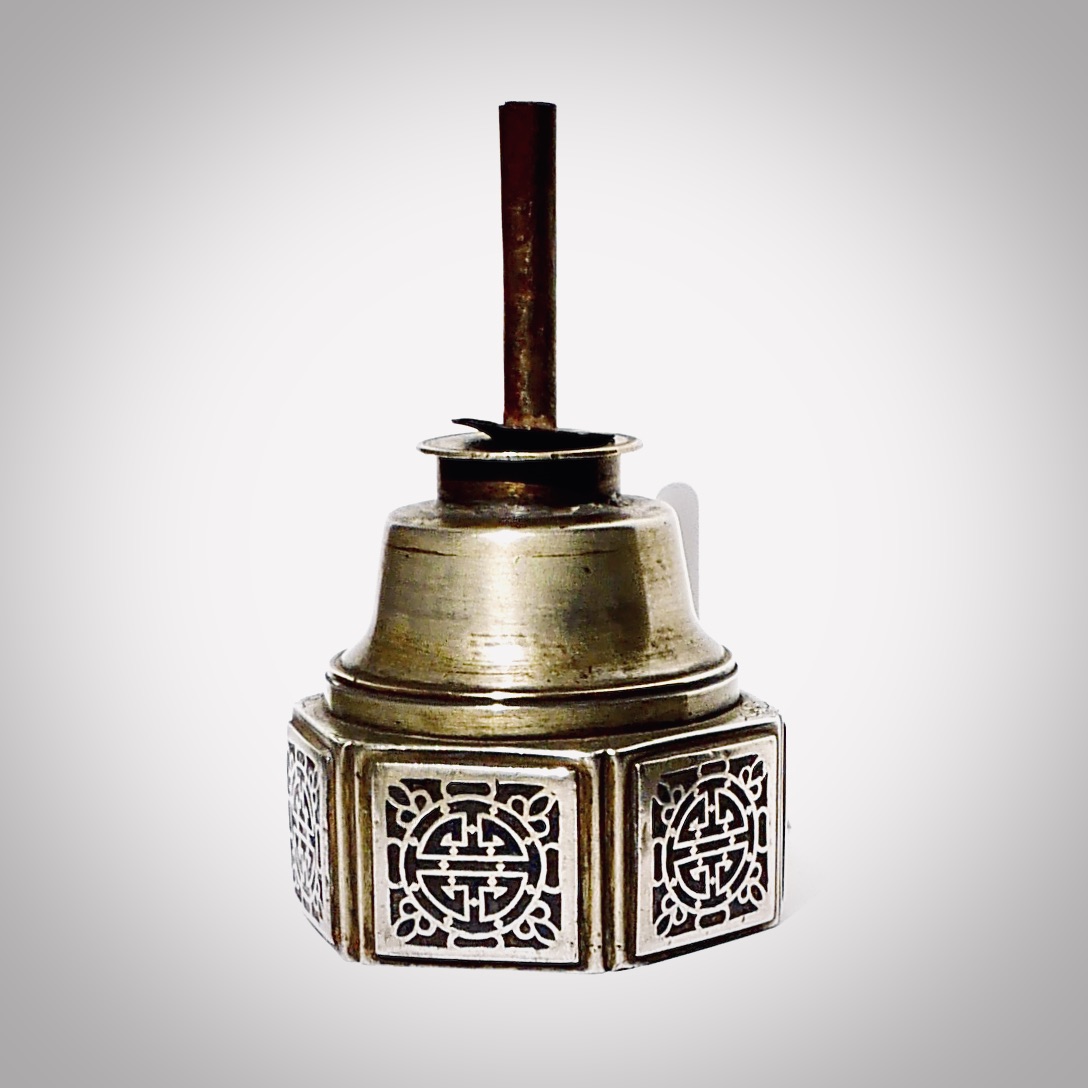
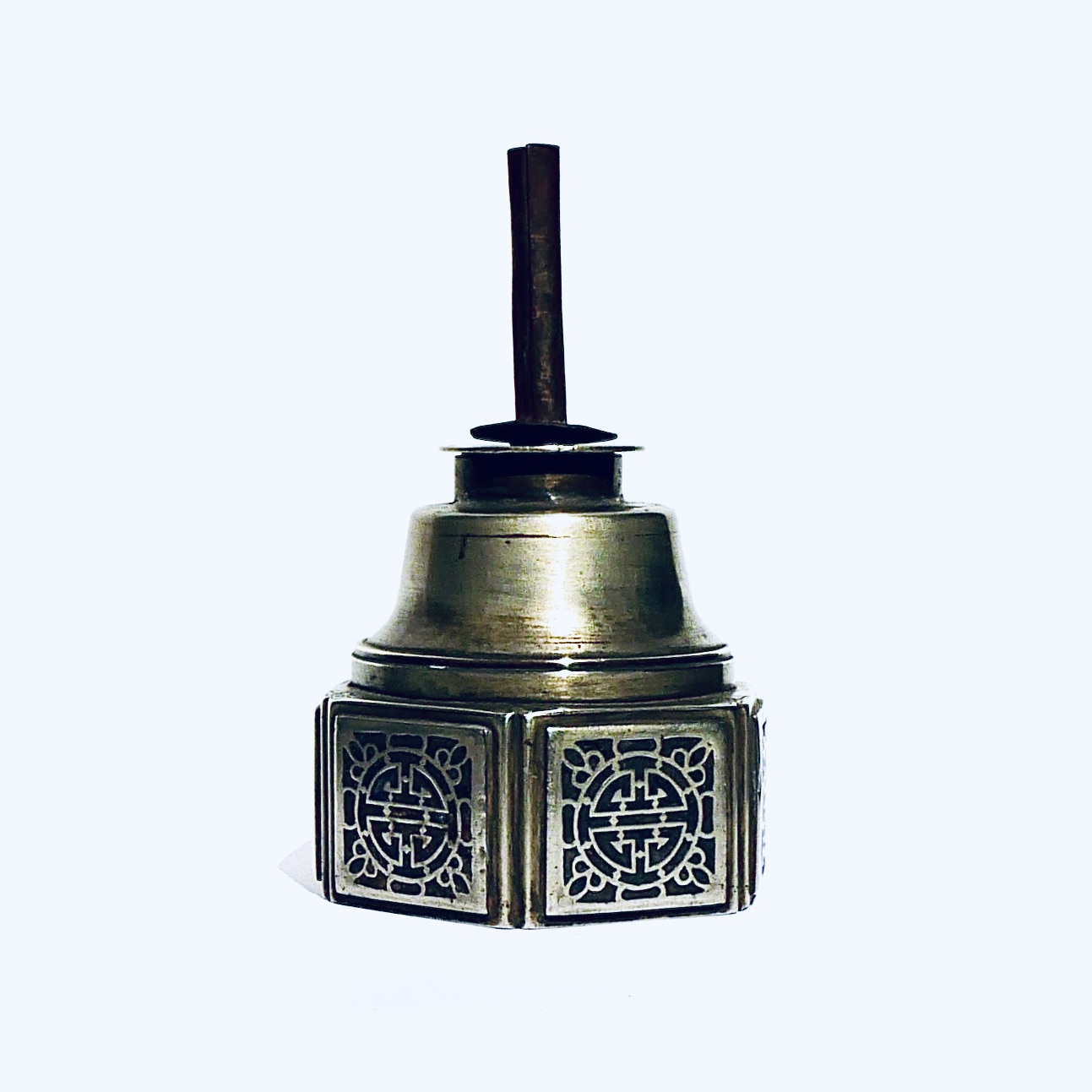
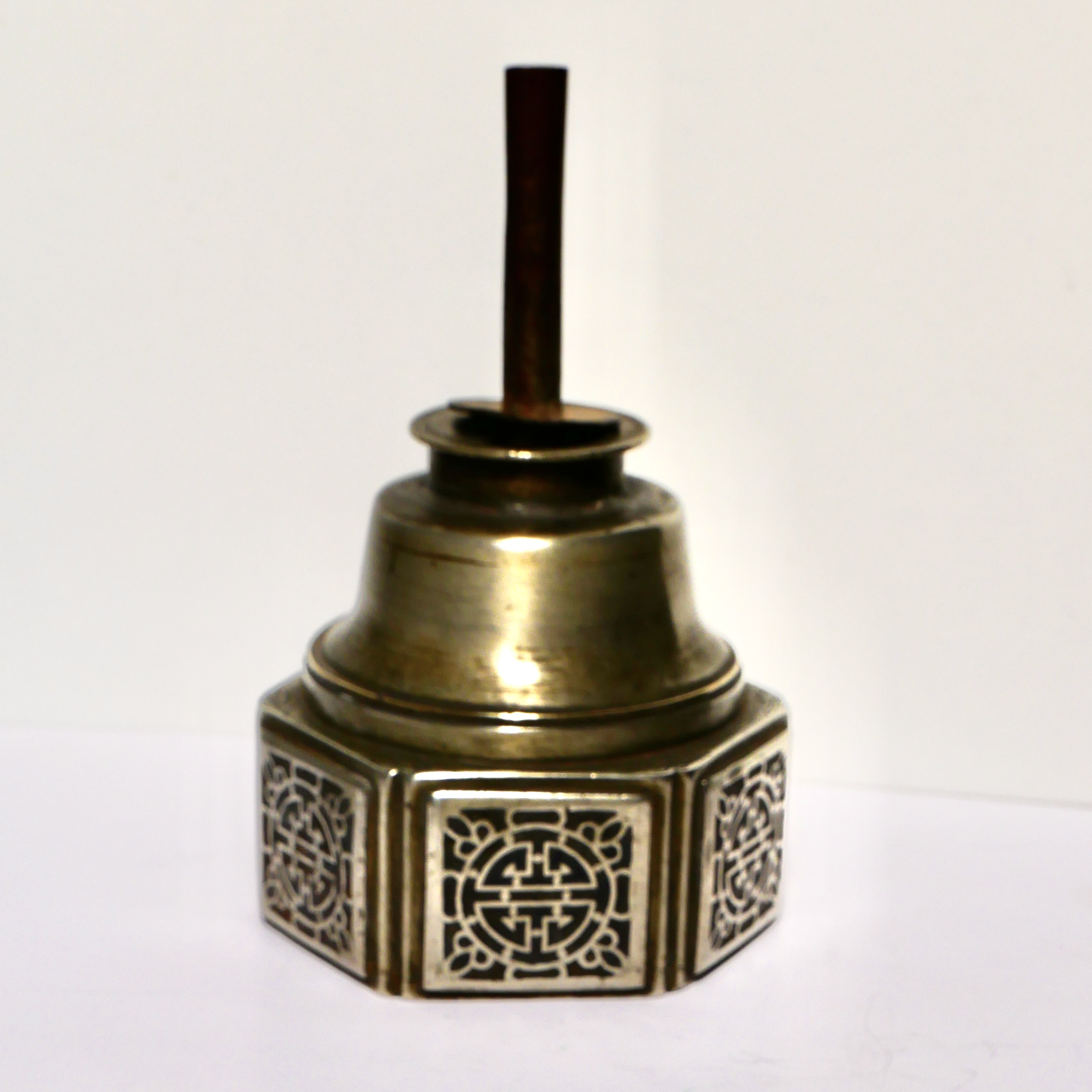
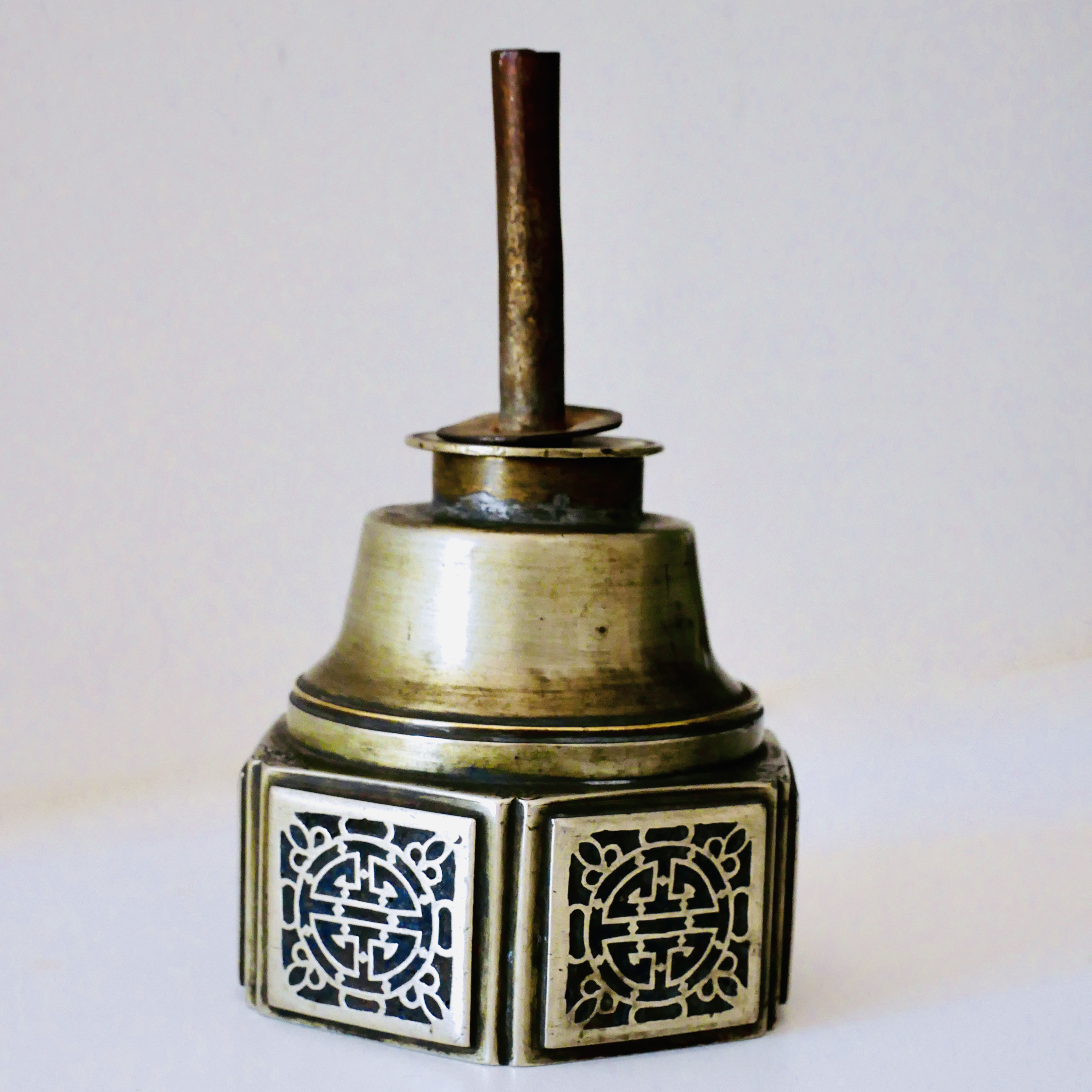
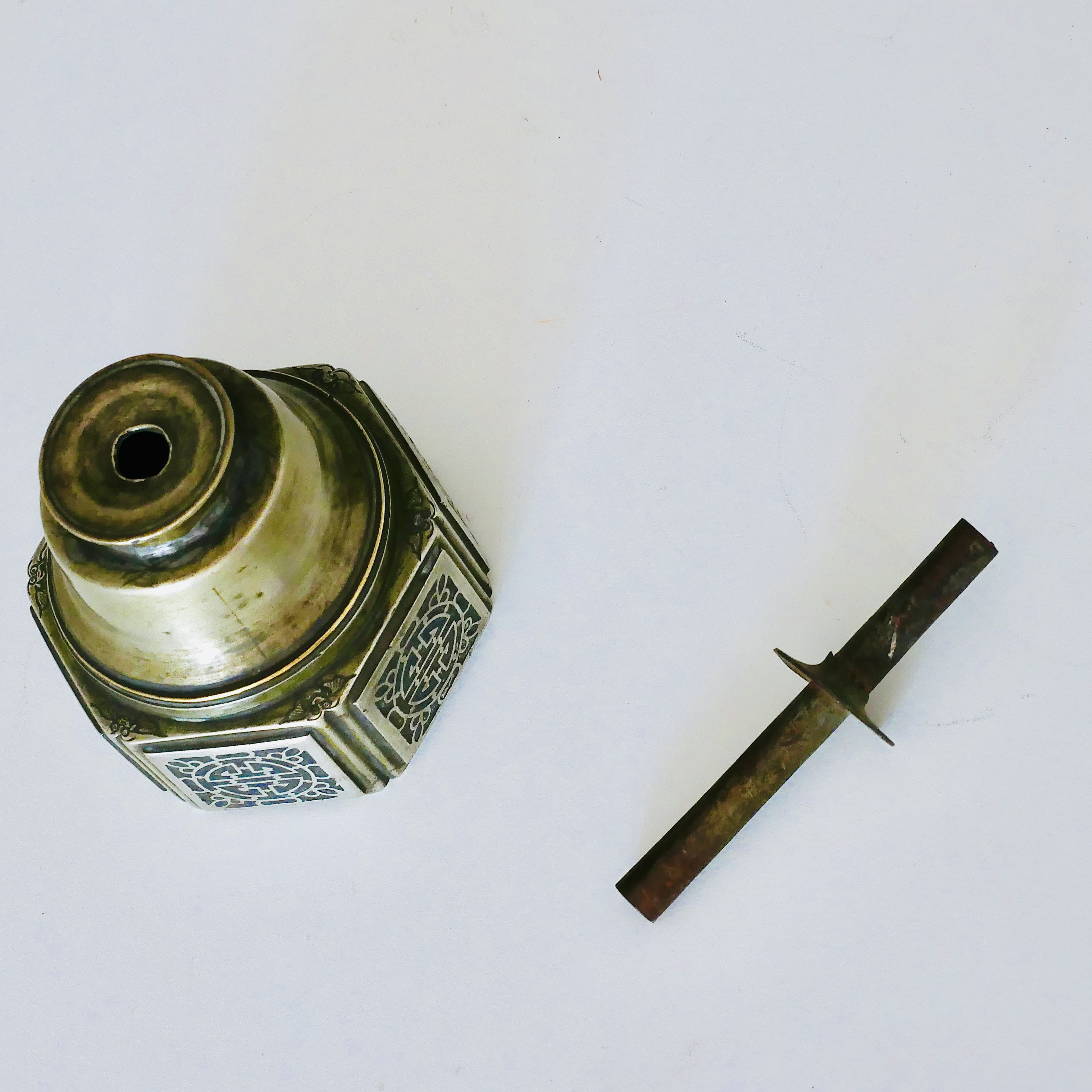
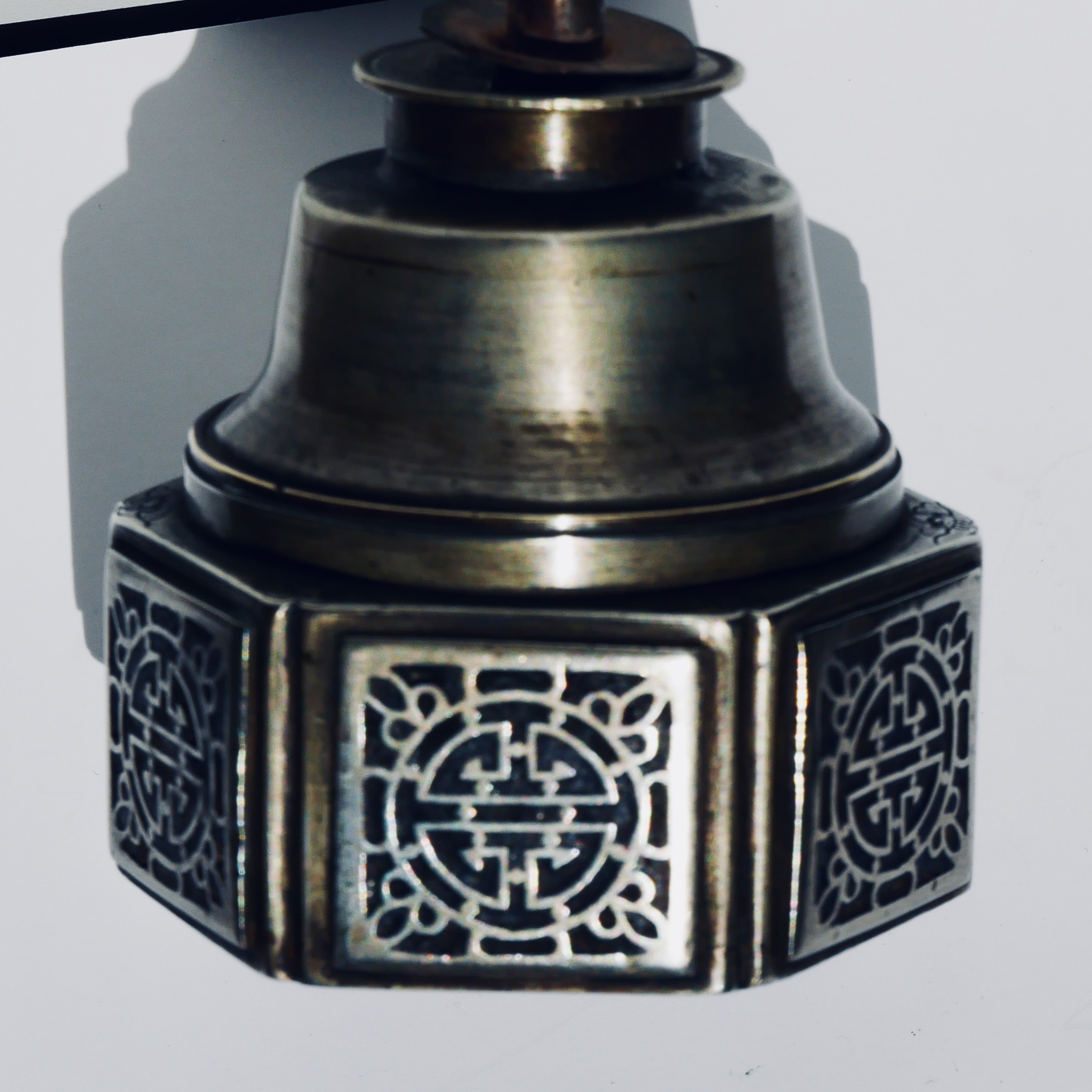
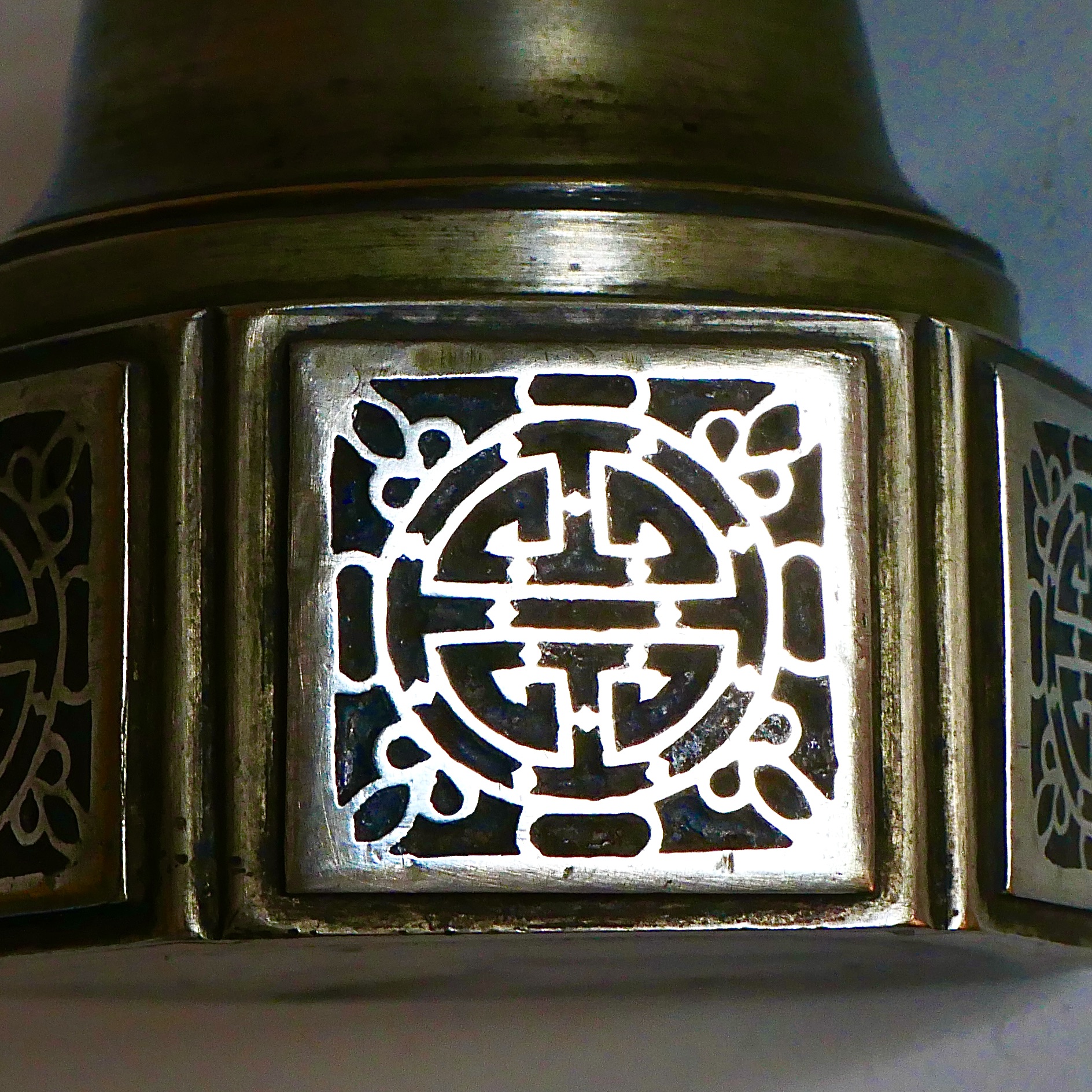
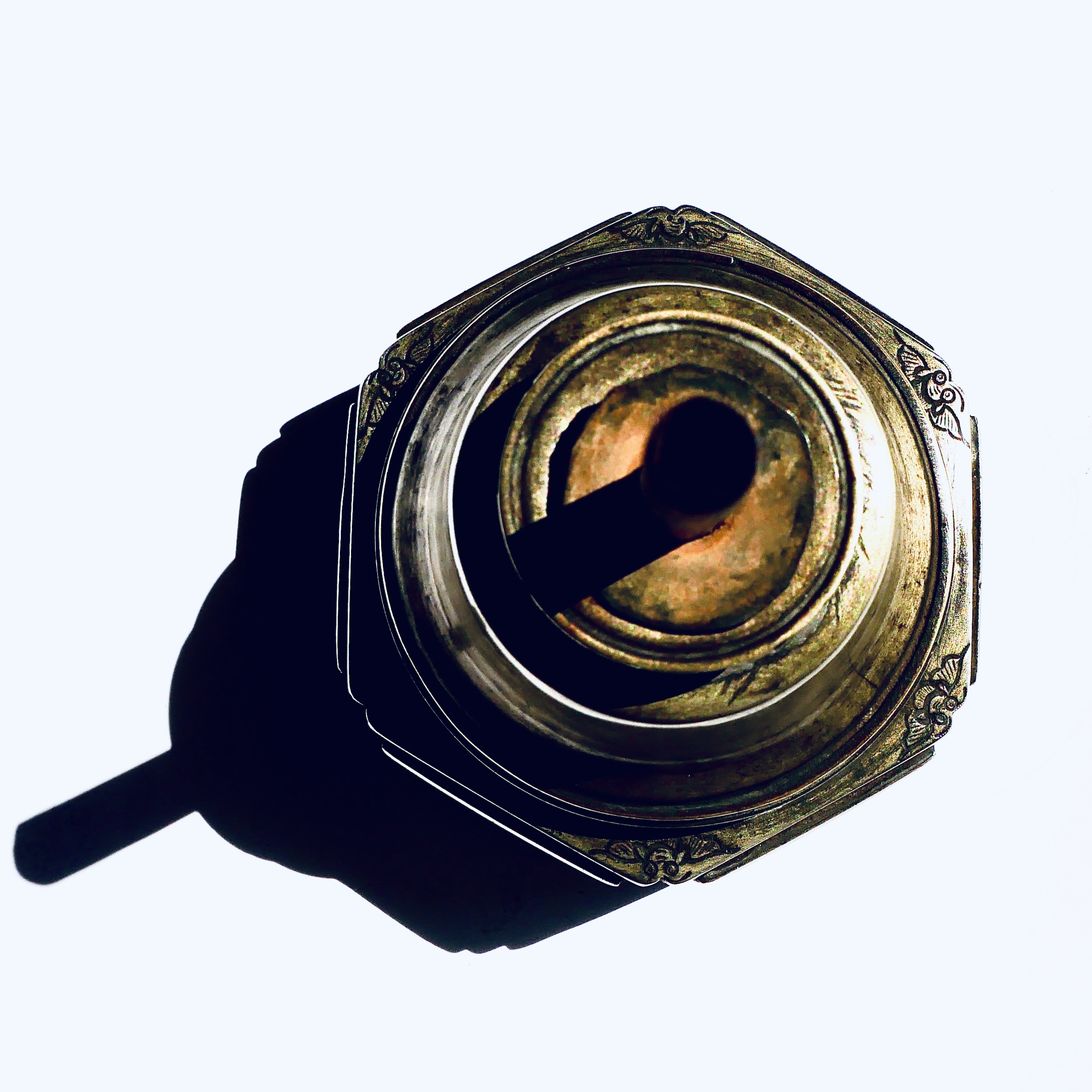
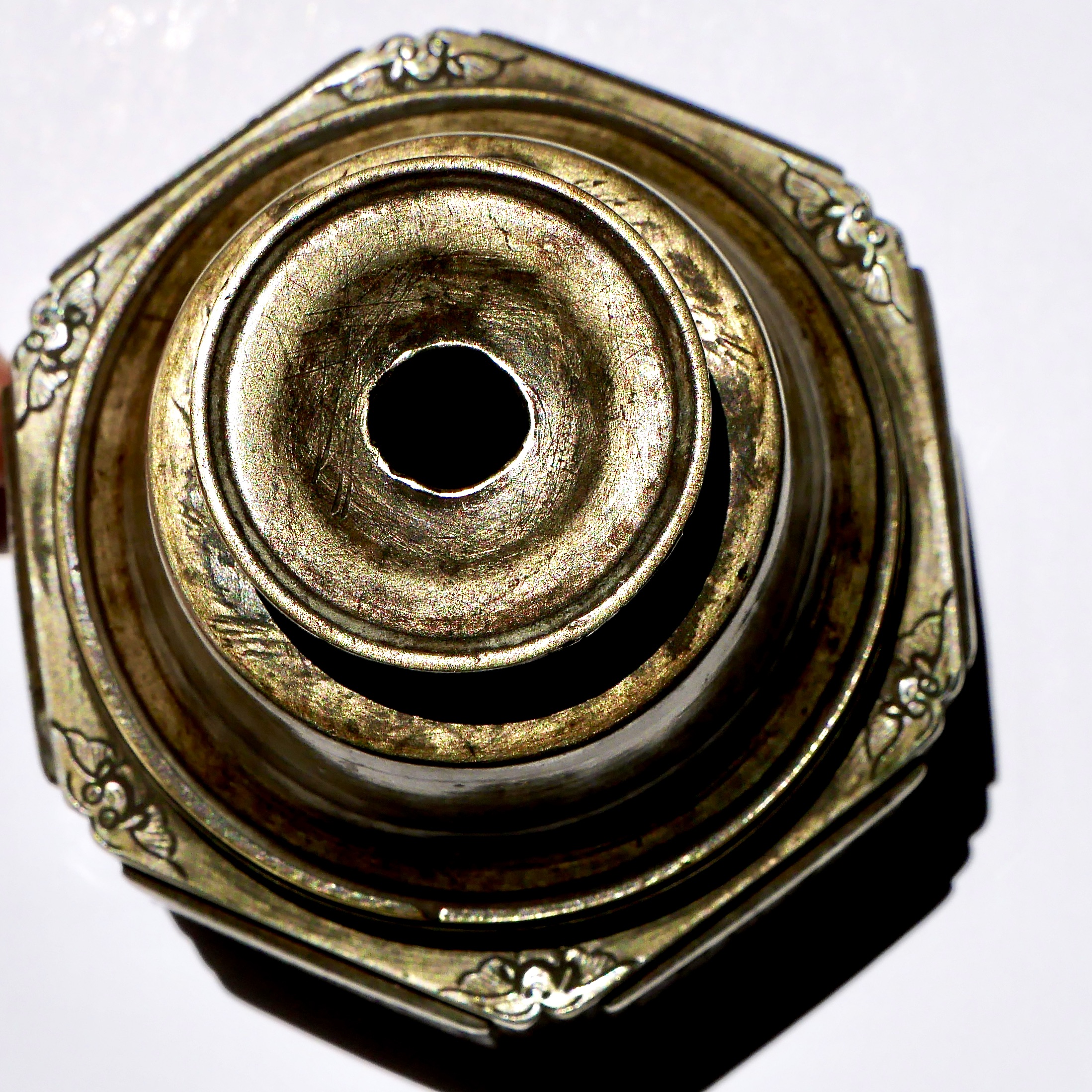
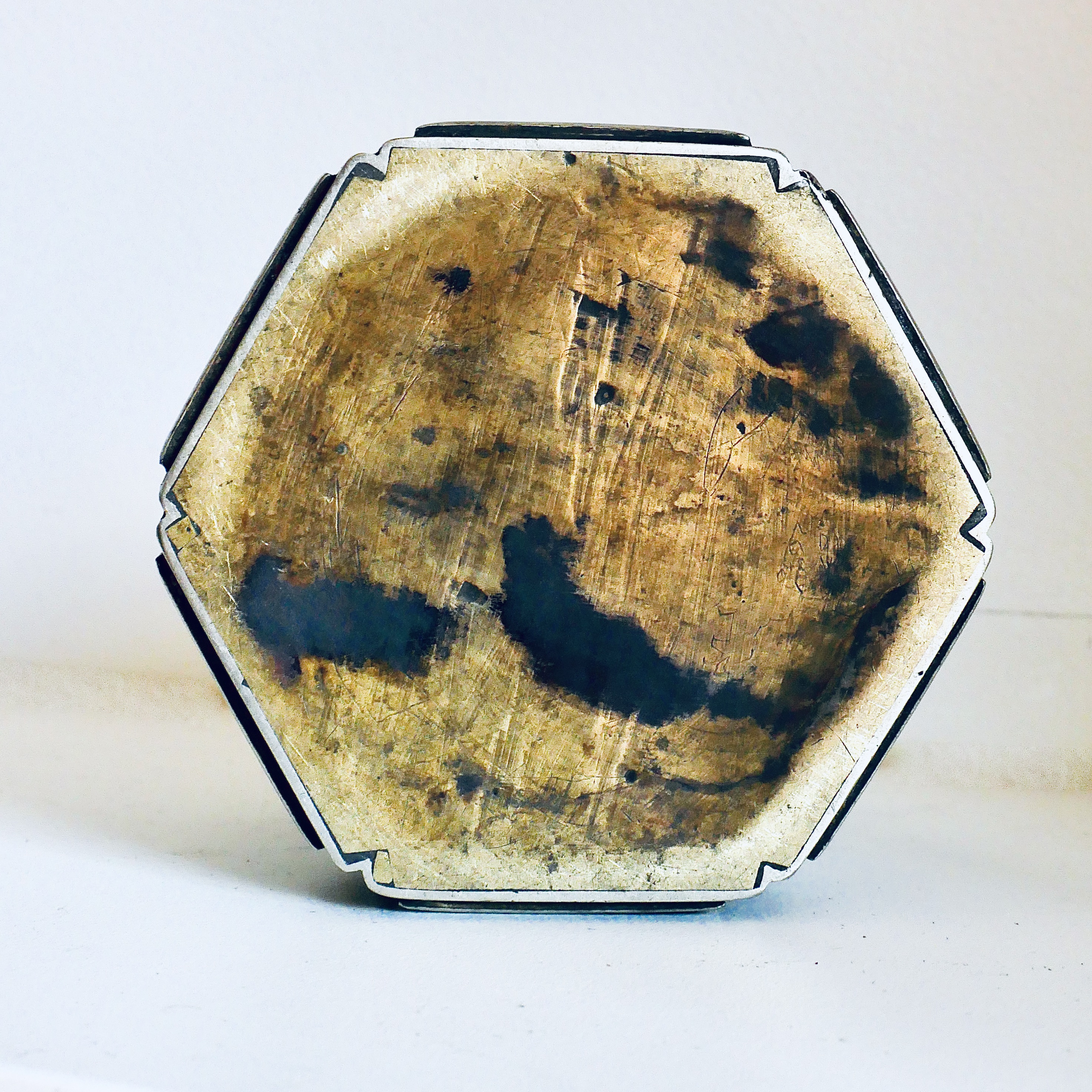
Paktong and Enamel Opium Lamp, Shou and Bat Motifs, China, Late 19th Century (Qing Dynasty)
Unknown artist — late 19th century
A small, hexagonal opium lamp featuring six blue cloisonné enamel panels and a bell-shaped upper section housing the wick holder. Such lamps were placed between two smokers to heat the opium—held above on a needle—before it was applied to the pipe bowl. This piece is crafted from a silvery metal alloy, likely paktong (or "Chinese silver," a copper-nickel-zinc alloy used in China for decorative objects). Circular medallions on the enamel panels display stylized “Shou" motifs—a symbol of longevity common in Chinese decorative art—or "double happiness" designs, both characteristic of Chinese production from the late 19th to early 20th century. The upper section also features six small, distinct stylized bat motifs (the bat is a symbol of good fortune, as the word for "bat" is a homophone for "happiness/luck" in Chinese). The intricate workmanship suggests a date in the late Qing or early Republican period. The lamp shows significant signs of use, including a black patina and some enamel loss. It bears no workshop mark (which is common; any mark on the base may have been worn away by frequent handling). Dimensions: 8 x 7 cm (13 cm including the wick holder).
Good overall condition; black traces of use, enamel loss.
Do you have a question?
Send us a message about this artwork.